
Tutoring works. It has never scaled.
A student with a good private tutor learns dramatically more than one in a classroom. Almost nobody gets one, because a person watching you work costs by the hour. Klera is that person, on the iPad students already study on.
The oldest result in education
One-to-one tutoring beats every other intervention we know of.
In 1984 Benjamin Bloom reported that students taught one to one performed around two standard deviations better than students taught in a class: the average tutored student outperformed nearly everyone in the classroom. Forty years of follow-up research has put the size of the effect lower, but tutoring remains one of the largest, most reliably replicated effects in education.
Bloom called it the two sigma problem: not how to make tutoring work, but how to give its benefit to everyone when a human tutor for every student is unaffordable.
What a tutor actually does
It is not the explanations. Those are in every textbook. It is watching the student work: seeing the hesitation before the first line, the erasing, the moment they go quiet, and stepping in with exactly the right amount of help. Then stepping back.
Why now
Three things changed at once.
- 1Models
AI can finally do the maths
Reading handwriting and reasoning through university problems went from unreliable to routine in two years.
- 2Hardware
The pen is already there
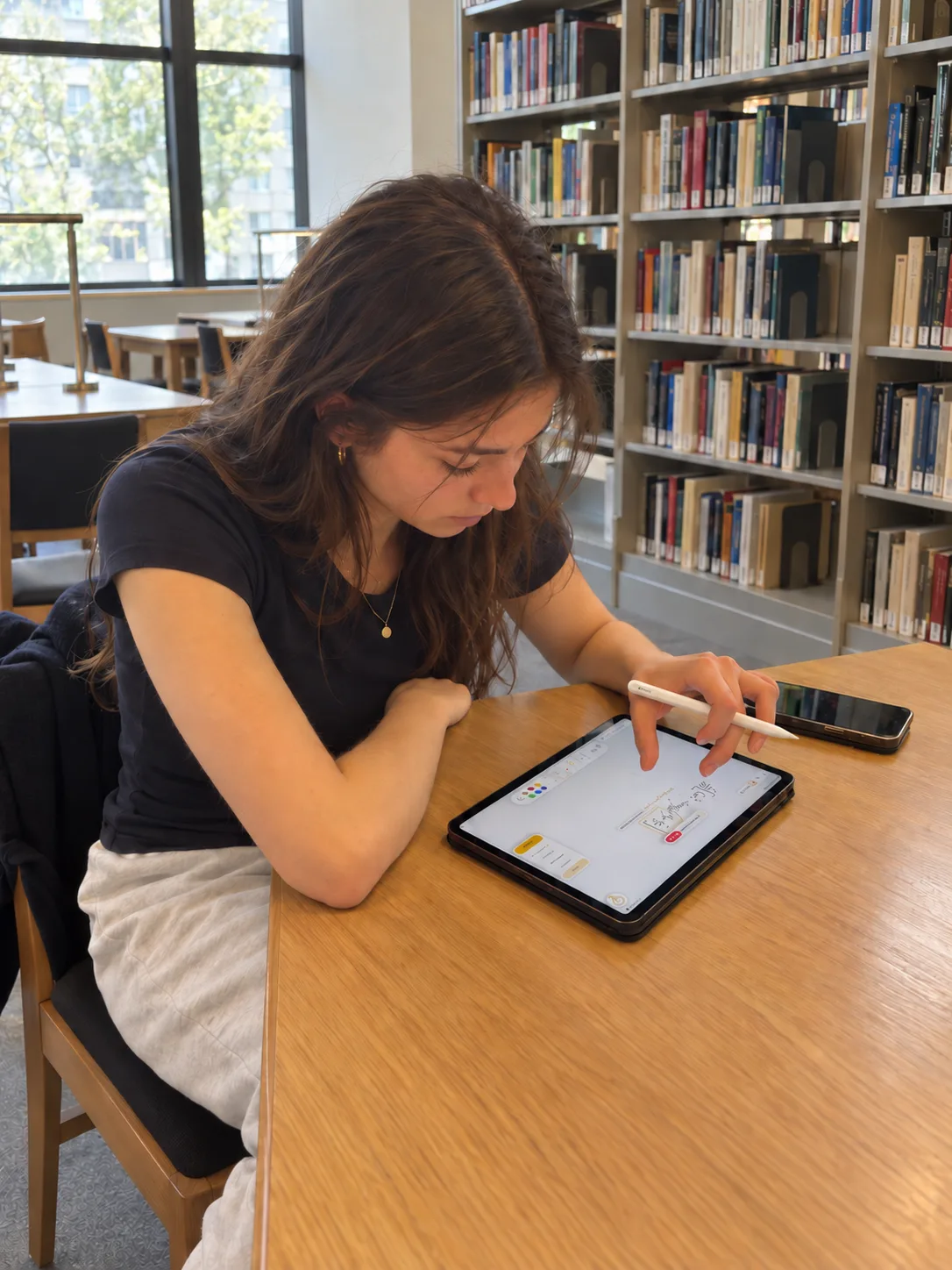
Students take notes and revise on iPads with Apple Pencil. The sensor a tutor needs is in their bag.
- 3Behaviour
Students already study with AI
The habit exists. What they use is built to answer, not to teach.
Answer machines make it worse
The fastest way to satisfy a student is the surest way to stop them learning.
The evidence
In a large field experiment (Bastani et al., 2024), students given an unrestricted chatbot did better on practice problems and worse on the exam once it was taken away. A version designed to guide rather than answer removed most of that harm.
Blind between messages
A chat window sees a student twice: when the question is typed and when the next one arrives. Everything a tutor reacts to happens in between, and is lost.
The opening
The product that wins is the one that makes students better, not the one that makes homework faster. That needs a different kind of input, and a tutor willing to hold back.
What we've built
Working today, on a real iPad.
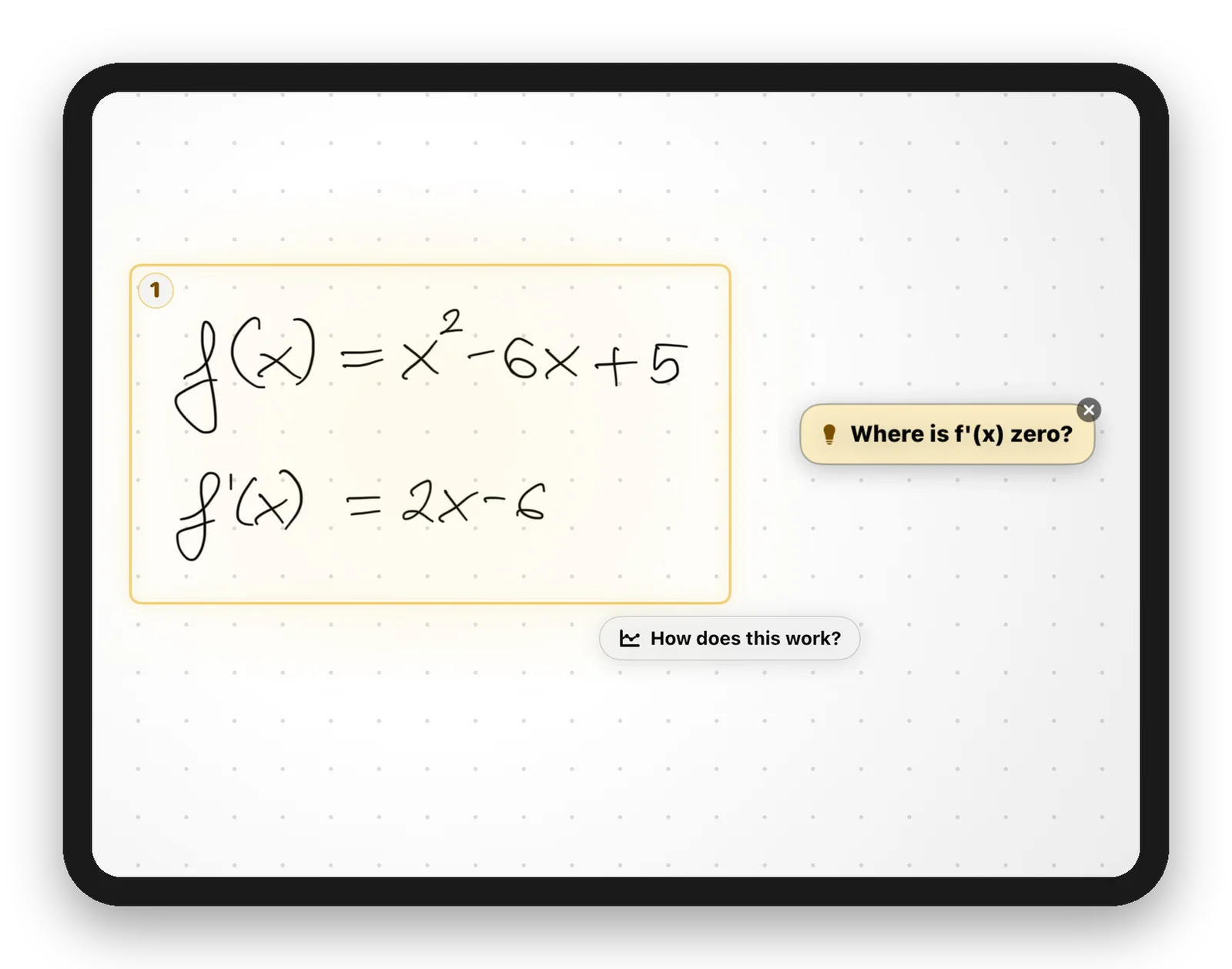
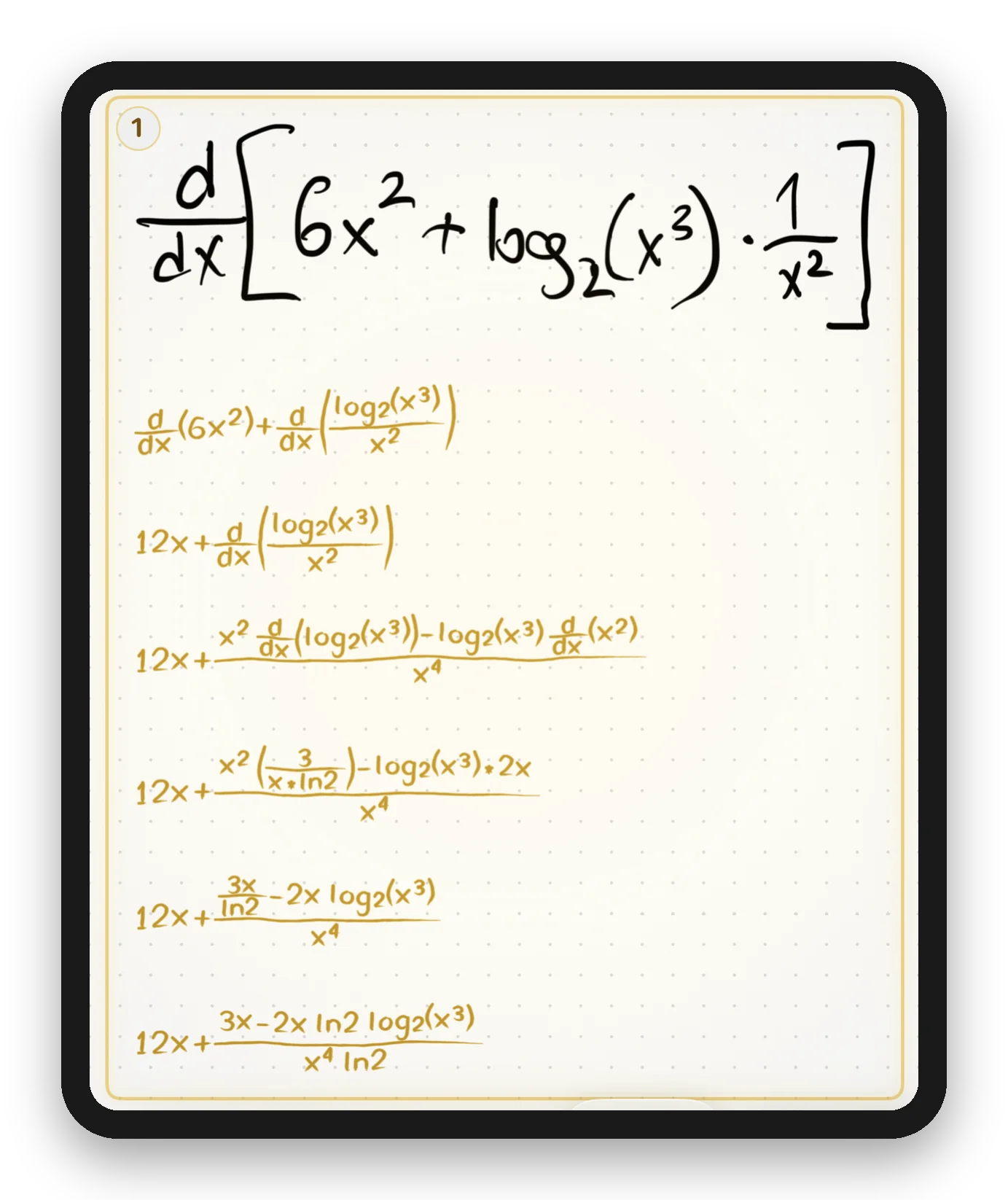
A whiteboard that writes back
Students work by hand with Apple Pencil. Klera answers in real handwriting on the same page, and talks them through it.
A tutor that watches the pen
It reads how a student is working, not just what they wrote, and decides between a hint, a question, or silence.
A model of each student
It learns how each person gets stuck and what helps them, and gets sharper every session.
Why it's hard to copy
Three different kinds of difficulty, stacked.
Data
Signal nobody else collects
How a student writes, pauses, erases and asks for help only exists on a native canvas with a pressure-sensitive pen. A chat or web product cannot get it by trying harder.
Craft
Teaching, not answering
Knowing when to hold back, and writing back as natural handwriting on the student's own page, took four generations of engine to get right. It is the part a general AI company has no reason to build.
Compounding
It gets better the longer you stay
Every session sharpens the model of that student. Two months in, the help is calibrated to them. Leaving means starting from a blank page.
| Chat AI | Human tutor | Klera | |
|---|---|---|---|
| Works from your handwriting | No | Yes | Yes |
| Sees you while you work | No | Yes | Yes |
| Holds back the answer | Rarely | Yes | Yes |
| Remembers you across months | Barely | Yes | Yes |
| There at 11pm before the exam | Yes | No | Yes |
| Cost | Near zero | Tens of euros an hour | A subscription |
How the business works
Students pay first. Institutions and parents scale it.
1
Students
€9.99 a month, well below a single hour of private tutoring. Exam season is the wedge: the moment a student will pay to understand.
2
Universities
Campus licences, and insight for departments into which topics a cohort is quietly losing marks on.
3
Parents
Families already spend heavily on tutoring. Klera is a fraction of the price and available every evening.
Where we are
Written plainly.
Ask us for the deck
Numbers, market and plan are in the deck, and we would rather walk you through the product on an iPad. Write to both founders.